Weekly status
Choose for the pilotRepeated task, reference reports, named reviewer. Compare full preparation and review time.
For PMO, IT and engineering leaders whose reporting takes manual effort and who need to choose a useful scenario before choosing a tool.
Development, integrations and production operation are not included in discovery. A pilot and implementation are agreed separately.
Demonstration · fictional data
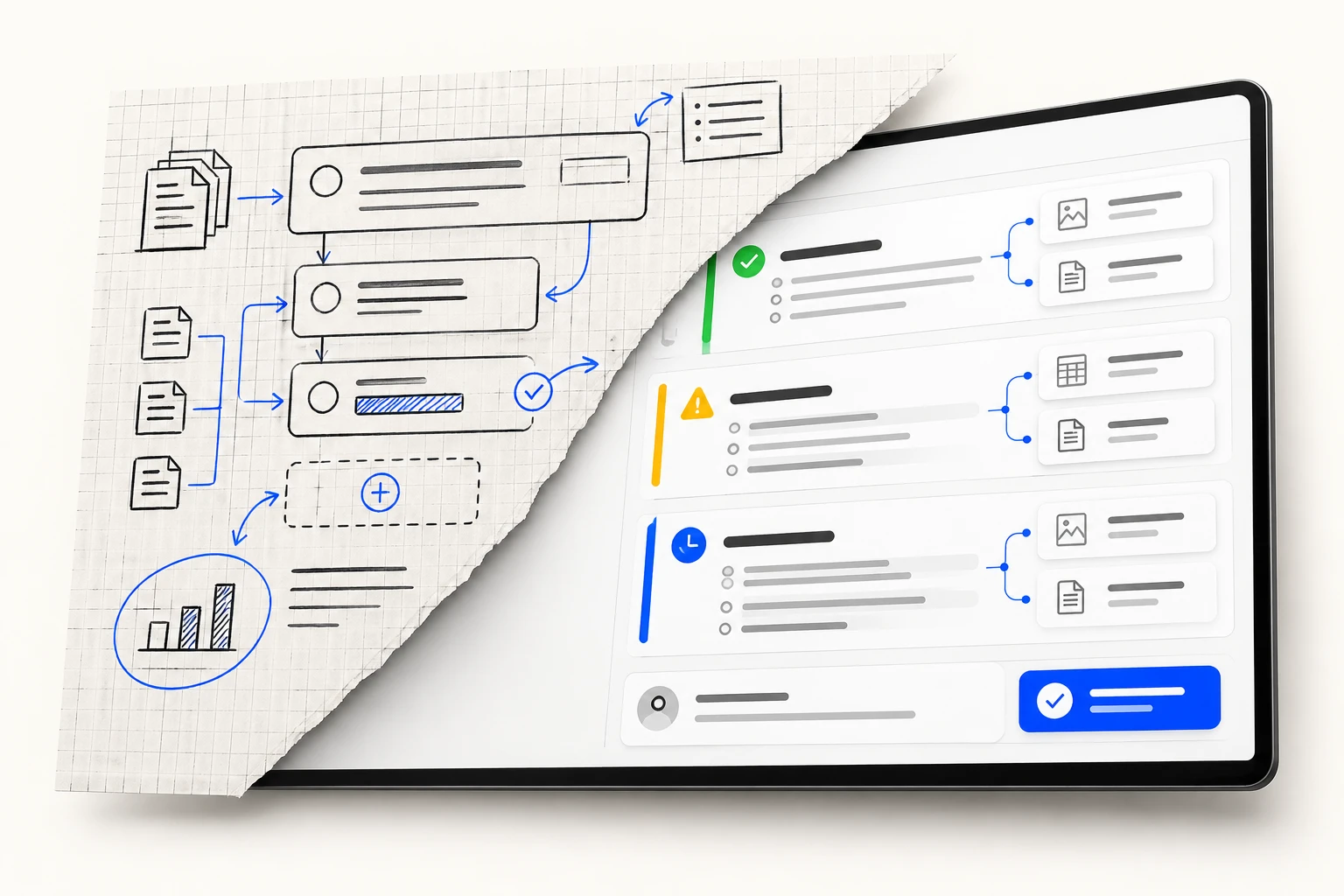
A fictional team assembles a weekly status from tasks, a plan and meeting notes. This demonstrates the decision, not a client outcome.
Baseline: no measurement yet. The team’s estimate of preparation time must be checked with a time log, including review and corrections.
Repeated task, reference reports, named reviewer. Compare full preparation and review time.
A usable knowledge base and an access model are needed first.
Review transcription quality and consent before using recordings.
A responsible person must resolve conflicting dates and authorise release.
Acceptance: compare the same reference reports, verify material facts, flag missing sources and record the reviewer’s decision. Agree numerical thresholds before the pilot. Implementation is not part of discovery.
One process, available materials, constraints and a responsible person on your team.
What would be useful and which examples will demonstrate that it works.
Discovery or a pilot with a clear scope. Scope changes are agreed separately.
Materials, documentation and a decision: develop, change the scenario or stop.
Before starting, we agree on hosting, access, source materials, documentation and handover. Support, response times and work with new sources are scoped separately.
That is a valid result: we explain why a process change or conventional automation would be more appropriate.
We agree on sample materials and interviews for the initial assessment. We check that they are sufficient before starting.
No. You receive the report and decide independently whether to commission another stage.
Start with one useful result. The next stage is a separate decision.
When you need to choose a scenario first. A process map, 3–5 options and a reasoned pilot recommendation.
When the task is already clear. A report for one project, traceable sources and human review. Start directly.
A landing page or a full website, your own content admin and a portal. CRM and AI where needed.
Discovery and a pilot purchased separately start at RUB 370,000 in total. Discovery is not mandatory before a pilot; there is no automatic continuation or fee credit.
Leave a contact and a few lines about the task. We will discuss fit, materials and the next step during business hours.
info@An enquiry is not a purchase. We will respond about the service you selected.